
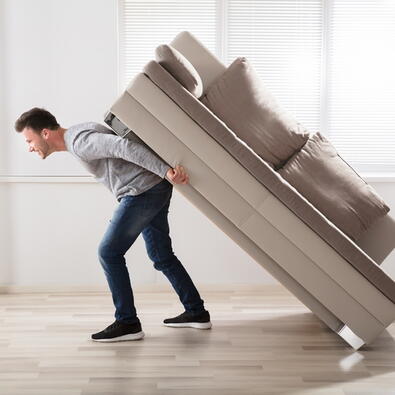
How To Move a Couch the Right Way
Before moving day, one item usually causes the most stress: the couch. Unlike many beds, couches are hard to disassemble, squeeze through tight doorways, and navigate down stairwells. Sofas are bulky, heavy, and awkward to carry. And sleeper sofas and sectionals add even more weight. This all means getting the couch to the moving truck can feel incredibly daunting.
Moving a couch safely starts long before the first lift. You can’t just count from three and lift—otherwise, you risk severe injuries. You need to move a couch without causing back problems, scraping walls, and tearing upholstery, so the planning process begins well before anyone removes a cushion. Here are the supplies you’ll need, the steps to follow, and a few professional tips that can make the move easier.
Essential Tools and Supplies
Having the right equipment makes moving a couch safer and much less stressful. You can purchase most of the items below from your favorite hardware store, and some you can even borrow or rent the day before your big move. Here’s what to have on hand:
- Tape measure: Before you move anything, measure doorways, hallways, and stairways to ensure the couch will actually fit.
- Allen wrench and screwdriver: If your couch won’t fit through a doorway, detach legs, brackets, sectional connectors, and sleeper frames to reduce both size and weight.
- Work gloves: Heavy-duty work gloves are easy to overlook when packing moving supplies. They protect your hands from staples, splinters, friction burns, and a slippery grip.
- Moving blankets: Wrap your couch fully in a moving blanket to guard against rips in the fabrics and scuffs on flooring or walls during transport.
- Furniture pads: Cover sharp corners that may catch on door frames. Place one pad under each leg so that you can glide the couch along hardwood or tile without scratching the floor.
- Plastic stretch wrap: With a buddy’s help, hold the moving blankets in place and wrap the couch in plastic stretch wrap to keep cushions, upholstery, and loose parts secure.
- Furniture dolly: Instead of overworking your back, a furniture dolly carries the weight of the couch for long stretches, especially down hallways and sidewalks.
- Lifting straps: Lifting straps redistribute weight across your shoulders and legs, which helps reduce strain on your back.
How To Move a Couch: Steps for Success
Your typical couch move follows the same few steps, no matter the type of sofa. It’s best not to skip any steps, as they lead into each other. Here’s what to plan for.
1. Prepare the Space and Measure
Once you’ve gathered all the tools above, have your tape measure on hand first. Measure the couch lengthwise, widthwise, and diagonally, then from the floor to the top of the backside. Next, measure each doorway, hallway, stairwell. If your building has an elevator, check that, too. Look for tight spots and angles that might cause problems. If the numbers don’t align, you may need to find a different route.
2. Disassemble If Necessary
If the couch will fit through your doorways and hallways as is, you likely won’t need to disassemble it completely. But you still will want to remove the cushions and pillows and bag them before the move. If your doorways don’t allow for enough clearance, remove the legs. Most sectionals come apart at the connectors, which reduces the weight significantly. Don’t forget to drop any hardware you remove into a labeled bag taped to the underside of the frame or a labeled box.
3. Protect the Couch and Space
A few moving blankets and a bit of stretch wrap to keep everything snug help protect your couch during transit. Pay special attention to the corners and armrests, which are most likely to come into contact with walls and door frames during the move.
4. Clear the Path
Before you lift, take one last walk along the path you need to follow. Move things like rugs, cords, and other furniture. If you have pets or young children, keep them occupied in another room with the door closed. When you’re lifting a few hundred pounds down a narrow hallway, the last thing you need is someone stepping into the hallway mid-carry.
5. Move the Couch
Position one person at each end of the couch, and make sure everyone has a firm grip before lifting. Lift with your legs instead of your back, and keep the couch close to your body while carrying it. Once you reach a doorway, use the “hook” technique by standing the couch on its end, tilting it 45 degrees, and rotating it slowly through the frame, one corner at a time. You should have a partner through this entire process, and talk through each step before turning or lowering the couch.
If moving couches is more than you want to tackle yourself, College HUNKS Hauling Junk & Moving can step in. Our crews bring the dollies, straps, and moving blankets needed for the job, and they’ve moved enough couches safely to know all the angles.
Tips to Consider When Moving a Sofa
The best way to move a couch is the safest way. Here are a few pro tips to help:
- Hire professionals when you’re outmatched: There’s no shame in calling a professional moving crew when dealing with heavy sleepers, large sectionals, or third-floor walk-ups and narrow doorways. That’s where DIY moves tend to go off the rails and experienced movers prove their worth.
- Book early during peak season: Summer is typically the busiest season for movers. Booking at least two to four weeks in advance gives you a better chance of securing your preferred moving date.
- Take corners diagonally: At first glance, your couch might look like it’ll refuse to pass through a doorway. It usually does, though. If you do opt for DIY, tip the couch on one end, then guide it through the doorway at an angle.
- Always have a partner: We can’t stress this enough. For DIY moves, even a two-person loveseat is awkward enough that you might strain your back trying to carry it alone. Plan to have at least one person around to help—and up to four if you’re carrying anything over 300 pounds.
FAQ
How do You Move a Couch Through a Door?
Stand the couch on its end with the seat facing toward the doorway. Tilt the entire sofa approximately 45 degrees, and slowly rotate it as you walk through the opening, one corner at a time. If it still doesn’t fit, remove the legs from the bottom and try again. Full disassembly is necessary if the couch still won’t fit after removing the legs.
How Do You Move a Couch Downstairs?
When carrying a couch downstairs, have the stronger person at the bottom. They’ll carry more weight and set the pace. The person at the top will guide and steady the couch. Use moving straps to help alleviate some of the pressure and balance the weight. Don’t forget to communicate and call out each step.
What’s the Cheapest Way To Move a Couch?
The cheapest way isn’t necessarily the best way to move a couch. But if you’re trying to save money, a rented dolly and truck won’t cost too much. The trade-off is extra risk. If any step goes wrong, it’s possible to wind up with a damaged couch, scratched floor, or strained back. Professional movers can help reduce the risk of injury or damage, especially during large or long-distance moves. Most crews bring their own equipment and handle the heavy lifting from start to finish.
Make Your Move Easier With College HUNKS
A successful couch move isn’t about how strong you are (though muscle certainly helps). It’s about smart preparation and patience. Measure your path, wrap loose items, clear the floor of obstacles, and bring along the right tools for the job. Those steps can save time, reduce stress, and help prevent damage during the move.
But they’re still a tough few hours without the right prep and training. If you’d rather skip the heavy lifting, College HUNKS Hauling Junk & Moving can manage the move for you. Our crews show up on time, bring the right equipment, and handle your couch carefully from start to finish. Contact us for a free, no-obligation estimate when you’re ready.