

Key Takeaways
- Consider the type of flooring you have when choosing protective covers like carpet film, tarps, or cardboard.
- Don’t drag heavy furniture across the floor with no protection; use sliders or a dolly instead.
- Hire a professional moving crew if you don’t want to handle floor prep yourself.
How To Protect Floors When Moving? A Practical Guide
Moving day can get stressful when someone’s grip slips and a dresser corner collides with the hardwood. Just one mistake can leave a scratch, dent, or crack that requires costly professional repair. Learning how to protect floors when moving can keep your wallet safe.
This guide explains the tools and techniques to keep your floors in good shape during a move. If you’d rather not take on the risk yourself, College HUNKS Hauling Junk & Moving offers full-service moving with a trained crew that handles the heavy lifting for you.
What Happens If You Don’t Protect Your Floors
Dragging furniture and dropping heavy items can damage floors during a move. When you drag a dresser across hardwood, the underlying grit is ground into the finish, leaving deep scratches. When a couch leg snags on the carpet, it tears up the material. Dropping an appliance in the kitchen can crack a tile clean through.
Some damage requires more than a quick touch-up. Deep scratches may require sanding and refinishing, while a torn carpet might need a patch. If you’re renting, floor damage could affect how much of your security deposit you get back.
Types of Flooring Protection for Moving
Bedsheets and towels may protect furniture in a pinch, but they aren’t reliable floor coverings. Hardwood gets scratched easily. Carpet fibers can snag on sharp objects, and tile cracks under heavy impact. You want to choose floor protection based on the surface and the equipment you’ll use.
Before placing down any type of flooring protection, sweep and vacuum the entire area you or your movers will take in the house. Even a single bit of grit can act like sandpaper on hardwood floors. Remember to roll up and stow any area rugs that might slide as someone walks across it.
Hardwood Floors
Choose a floor covering that remains in place despite foot traffic. Rosin paper is a good low-budget option. It protects wood flooring against grit and scuffs, and you can cut it to fit small areas, such as hallways or stairs. Overlap the sheets by a few inches and tape the seams so nothing catches during the move.
If you’re willing to invest a little more, a thicker self-adhesive floor protector resists tears and won’t slip when you walk over it.
Carpet
The easiest way to protect your carpet is with self-adhesive carpet film. You can pick it up at the hardware store. Once home, unroll it sticky side down, then lay it flat along the walking path. Once the film is placed, walk across it to press the material into the pile. It keeps dirt and debris off the fibers. Plastic sheeting can work in a pinch, though you should tape it down carefully with painter’s tape to avoid leaving a sticky residue.
Tile
Tile looks tough, but dropping a table or appliance on it can leave an irreparable crack. Stiff, thick protection works best for ceramic, porcelain, and other tile types. If you have some available, use corrugated cardboard for foot traffic and plywood for dolly routes. If you put down plywood, lay rosin paper first to avoid scratching the tile’s glaze.
Stairs
Stairs need extra attention during a move. Carrying bulky items can block your view and make each step harder to navigate. To protect the material and reduce the risk of slip-and-fall accidents, use carpet film on carpeted stairs and rosin paper on wood stairs. Skip the loose plastic sheeting, since it can become slippery the more you walk over it.
After covering the stairs, walk up and down them. If anything shifts under your foot, readjust it and tape it down.
Floor Protection Tools for Moving
You probably don’t want to stop for a quick trip to the hardware store once you start moving furniture. Schedule getting supplies into your moving timeline so you have everything in advance.
Furniture Sliders
Furniture sliders for moving sit beneath legs or corners, helping you reposition heavy pieces without dragging them across the floor. Felt-bottomed sliders work well for hardwood, tile, and other hard materials, while plastic sliders work best on carpets. Many stores sell sets with both types.
If you’re moving a dresser or couch a short distance, use furniture sliders. Consider renting a dolly or recruiting some strong friends to help you if you need to move anything heavy over a larger distance.
Moving Blankets and Cardboard
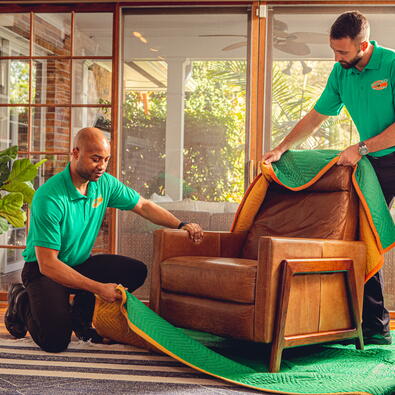
If your furniture has wooden legs, consider moving blankets and cardboard for extra protection. Moving blankets wrap around table legs, bed rails, and sharp corners to prevent scratches. You can secure moving blankets to furniture with stretch wrap.
You can use cardboard from old boxes to cover the floor. Lay it down anywhere you want extra protection.
Painter’s Tape and Carpet Film
Almost any type of floor protection you use will eventually start to shift underfoot on moving day. Use painter’s tape to secure pads, drapes, or cardboard without leaving a sticky residue. Carpet film is best for rugs, but only for short-term use.
How To Move Furniture Without Damaging Floors
Moving blankets, carpet film, and cardboard are all helpful when you want to protect floors while moving furniture. But there are handling techniques you can use as well. And knowing how to move heavy furniture properly can help protect your back and floors.
Don’t Drag Furniture
Don’t drag a dryer or other heavy appliances across the floor—that’s the fastest way to cause damage. If an item is too heavy or cumbersome for you to lift by yourself, either recruit some strong friends to help or hire a professional crew.
Use Dollies and Hand Trucks
A dolly or hand truck carries the bulk of an object’s weight, so you’re less likely to drop something. Look for one with rubber wheels, and wipe it down before bringing it into the house so it doesn’t leave track marks.
Disassemble Large Furniture First
Taking apart large furniture makes it easier to move through your home and onto the rental truck. Remove table legs, take apart bed frames, and remove drawers and loose shelves from dressers.
Keep Your Floors Safe with College HUNKS
If the thought of adding floor protection tasks to your moving checklist feels overwhelming, leave it to the pros instead. Whether you want someone to load furniture into your truck or take care of everything from packing to unloading, College HUNKS is here to help.
Contact your local team to discuss your needs and request a free estimate today.
Related Articles


Junk removal
Why risk your floors moving pieces you don’t want? We haul away old furniture and appliances before the move, prioritizing donation or recycling whenever possible.

Frequently Asked Questions
Most movers bring floor coverings, blankets, and door frame pads, but practices vary. You can learn how to prepare for movers, so you know what to do before the crew arrives, just in case.
Yes. If you want to ensure you receive your security deposit back in full, protect your floors when moving out. Photograph the floors before you move anything, and then again when you clear the room. If you note any damage, check your lease and discuss any concerns with your landlord.
Carpet film instructions vary depending on the brand and carpet type. Always read the manufacturer’s instructions first and remove the film within the recommended period. Leaving it in place too long may leave adhesive residue.
Hear From Our Happy Clients
The crew was on time, friendly and incredibly efficient. They had our whole garage cleared in under an hour.
Professional from start to finish. They wrapped all of our furniture and nothing was damaged.
Great communication and fair pricing. I will definitely use College Hunks again.
They donated most of our old furniture, which meant a lot to us. Highly recommend!
Fast, careful and polite. The team made our move stress-free.
Booked online in minutes and the crew showed up exactly when promised.