
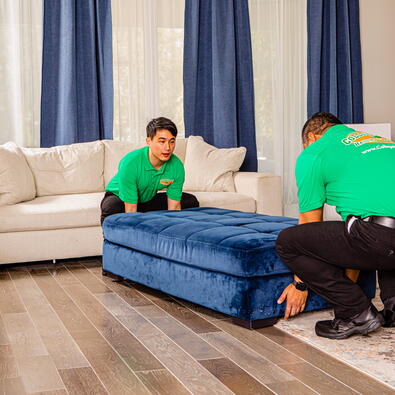
How To Move Furniture Up Stairs Without Damage or Injury
Few moving tasks create as much risk as carrying heavy furniture up a staircase. You're juggling an awkward load and an uneven center of gravity, with barely any room to maneuver. Tight corners and small landings don't leave much margin for error, particularly with larger items like sectionals or bedroom sets. One wrong shift and you're looking at gouged drywall or a pulled muscle.
This article walks through how to move furniture up stairs safely, from measuring your space to using the right technique. Most of that damage is avoidable with a bit of up-front preparation and a method that accounts for the stairs themselves.
For clients who'd rather leave the risk to someone else, College HUNKS Hauling Junk & Moving sends trained crews equipped to handle heavy furniture on stairs safely and efficiently.
What You Need To Move Furniture Up Stairs
The right equipment cuts down on injury risk and protects your home. A short shopping or rental list before a moving date can go a long way toward keeping the process smooth:
- Furniture dolly or stair-climbing dolly: Provides a stable base for transporting heavy items and reduces strain during the lift.
- Lifting straps: Distribute weight across your shoulders or forearms instead of your back, making bulky items easier to control.
- Moving blankets: Cushion furniture corners and shield walls, doorframes, and railings from scuffs.
- Furniture sliders: Help ease pieces across flat surfaces without dragging or scratching floors.
- Work gloves: Improve grip and protect hands from splinters, pinch points, and rough edges.
- Corner guards or cardboard: Add an extra layer of protection to tight stairwells and doorframes.
How To Carry Furniture Up Stairs Safely
Figuring out how to move heavy furniture up stairs rarely comes down to strength alone. A clear plan and at least two helpers all need to be in place before anyone lifts a corner off the ground. Use these tips for moving furniture up stairs.
1. Measure the Furniture and the Staircase
Before moving day, confirm the piece will clear every turn, landing, and low ceiling along the route. A few minutes spent measuring beforehand can prevent a costly surprise halfway up the flight of stairs.
2. Clear the Path and Remove Obstacles
Remove rugs and clear small furniture out of the way. Take down anything hanging on the stairwell walls too. A clean, open path means fewer chances to trip or clip something on the way up.
3. Disassemble What You Can
A bulky piece gets lighter and easier to angle around corners once you remove the legs, drawers, shelves, or cushions. If you'd rather not tackle this step yourself, some movers offer to disassemble furniture as part of their service. Keep hardware in a labeled bag so reassembly goes smoothly later.
4. Wrap and Secure the Furniture
Moving blankets and stretch wrap guard against scuffed corners and scratched walls. Well-secured padding won't slip loose mid-carry.
5. Use the High-Low Carrying Technique
Position one helper at the top of the piece and another at the bottom, with the stronger person on the lower, uphill-facing side since that position bears more of the item's weight. This staggered grip keeps the furniture balanced and makes turns more manageable.
6. Communicate With Your Helper at Every Step
Simple verbal cues like "stop," "turn," or "set down" keep everyone moving in sync. Staying in constant communication throughout the carry cuts down on slips and missteps.
7. Take Breaks and Reset Your Grip as Needed
A tired grip is how slips and strained muscles happen. Pause every few steps to rest and readjust your hold. Stop immediately if you feel pain or sense the item becoming unstable.
Common Mistakes To Avoid When Moving Furniture Up Stairs
Most injuries and property damage on moving day trace back to a small set of avoidable missteps, the kind that turn into moving horror stories if left unchecked. Recognizing these patterns ahead of time makes it much easier to sidestep them when the heavy lifting starts.
Lifting With Your Back Instead of Your Legs
Bending and rounding at the waist puts extra pressure on your lower back. It also cuts into your stability once you're actually moving. Squatting down, keeping your spine straight, and pushing up through your legs and hips shifts more of the effort to muscles built for lifting. This adjustment alone can lower your risk of strain.
Twisting Your Body While Carrying
A twisted torso under load, especially mid-staircase, puts uneven pressure on your spine and can lead to a serious strain. Pivoting your feet to change direction rather than rotating at the waist keeps your hips, shoulders, and knees aligned. This takes the pressure off your back and improves balance.
Skipping Measurements Before Moving Day
Furniture wedged on a landing or jammed against a railing is usually the result of assuming it would fit. Taking a few minutes to measure the staircase width, ceiling height, and turning space against the furniture's dimensions catches problems while there's still time to plan around them. Skipping this step often means troubleshooting mid-carry, raising the risk of dropping or damaging a piece of furniture.
Attempting a Heavy or Awkward Piece Alone
Even a strong individual can lose control of a bulky item the moment it shifts unexpectedly on the stairs. With a second person to help balance and call out turns, a controlled carry stays controlled. For pieces that feel too heavy or awkward, even with a helper, that's generally a sign that it's time to bring in additional hands or professional support.
When To Call in Professional Movers
Not every staircase move is a good candidate for a DIY approach. Knowing when to step back can save you from an injury or an unexpected, expensive repair. A few situations send a signal that trained movers are the safer call.
The Piece Is Unusually Heavy or Oversized
Some furniture, like a solid wood armoire or an oversized sectional, may require multiple trained movers or specialized equipment, depending on its weight and the layout of the stairs. If you're unsure how to approach moving heavy furniture on your own, that uncertainty is often the clearest sign to call in help.
The Staircase Is Narrow, Winding, or Has Tight Landings
Spiral staircases, sharp switchbacks, and landings with little room to maneuver can turn even a modest piece into a serious challenge. Low ceilings or slippery surfaces only compound the risk. These conditions often make it difficult to find an angle that clears both the walls and the ceiling.
You Don't Have a Reliable Second Set of Hands
Furniture on stairs generally isn't a one-person job. Without steady, coordinated help, it's easy to lose control mid-lift. If you can't line up a helper who's available and up to the task, that's a good reason to bring in a crew instead.
The Item Is Fragile, Valuable, or Irreplaceable
Pieces that carry significant monetary value or can't be replaced leave little room for a misstep. When the risk of breakage outweighs the cost of help, hiring furniture movers is often the more practical choice.
For situations like these, College HUNKS sends trained crews with the right equipment to handle the job safely, backed by insured service for added peace of mind. It's part of why so many clients consider us the best moving company for jobs like this.
Let College HUNKS Handle Your Move
Moving furniture upstairs safely starts with a few consistent habits. This includes measuring the space before moving day, gathering the right equipment, and using proper lifting techniques throughout. Planning the route in advance and staying alert to signs of fatigue or instability all work together to protect you, your furniture, and your home.
Some pieces, though, are simply too heavy or valuable to risk on your own. When a staircase move feels beyond what you and your helper can safely manage, College HUNKS is ready to step in with trained crews and the right equipment for the job.
Reach out for a free estimate and put the job in experienced hands.