
How To Move a Dresser: What To Know Before You Lift
Moving a dresser can be a hassle. Its size and uneven weight make it hard to grip and maneuver. Lift it without preparing first, and you could strain yourself, damage the floor, or loosen the dresser's frame.
Learning how to move a dresser comes down to a few strategies: Check your route, reduce the weight where possible, and protect the piece before moving it from its current spot.
This guide shows you how to tackle every step successfully. But if you'd rather skip the heavy lifting, College HUNKS Hauling Junk & Moving can handle it for you. Professional movers tackle jobs like this quickly and efficiently—with no muscle strain or chipped door frames to speak of.
How To Move a Dresser: Step by Step
Before you lift anything, lay the groundwork. A few minutes spent measuring, clearing the route, and gathering the right equipment can save you from getting stuck at a doorway with nowhere to set it down.
Here’s how to move a dresser successfully, including the essential prep.
1. Measure the Dresser and Plan Your Route
Take down the dresser’s height, width, and depth. Include any trim or handles that extend beyond the main frame. Then walk the full route and measure every narrow area it has to pass through, like doorways and landings. Don’t forget to check elevators and stairwells.
Do a quick cleanup while you’re at it. Move boxes out of the way, roll up loose rugs, and make sure there’s enough room to turn at tight corners. You may have to take a door off its hinges to get the clearance you need. It’s much easier to make these adjustments while the dresser is still sitting safely in place.
2. Empty the Drawers and Remove Fragile Parts
Emptying the drawers takes quite a bit of weight off the dresser. Loose objects may also roll around, catch inside a drawer, or throw off the balance when you tilt the piece. Remove these items and pack them separately.
Whether the drawers stay in depends on the dresser. Well-fitted drawers can remain as long as they’re empty and secured in place with lightweight tape. If the drawers tend to slide open or the dresser is too heavy with them in, take them out and carry them separately.
Mirrors and glass shelving should always come off before the dresser moves to prevent dangerous breaks. Remove other pieces, like knobs and legs, only if they’re vulnerable or make the dresser too big to fit through the route.
Pro tip: If you need to disassemble your dresser, put the hardware in a labeled bag so it’s simple to put back together later.
3. Wrap the Dresser for Moving
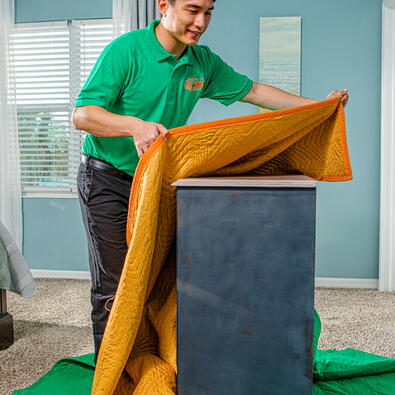
Knowing how to wrap a dresser for moving starts with protecting the finish. Cover the dresser with moving blankets, paying extra attention to its corners and decorative details. Secure the blankets with stretch wrap or packing tape. But apply these only over protective material. Tape and plastic wrap placed directly on wood can damage the finish.
Wrap mirrors and glass pieces separately. Use bubble wrap, then a moving blanket, and secure the bundle with packing tape. Set them upright in a box rather than laying them flat. This positioning keeps weight distributed, helping prevent cracks (it’s also useful when packing dishes).
4. Lift and Move the Dresser
The safest way to move a heavy dresser across a flat route is with a furniture dolly. With one person steadying the dresser, tilt it just enough to position the dolly underneath. Center the weight and secure the dresser with moving straps before rolling it slowly along your route. Have someone walk beside it to watch the corners and help guide it through narrow spaces.
If you're carrying it, lift with at least one other person. Decide who will move backward, agree on simple directions, and lift at the same time using your legs instead of bending at the waist. Keep your fingers away from doorframes and lower the dresser completely if either person needs to adjust their grip.
5. Load and Secure the Dresser in the Truck
Use the truck's ramp or lift gate to reach the cargo area—don’t try to lift it straight into the truck. Once it's inside, place it upright against a solid wall where it won't place pressure on fragile boxes or shift into other furniture.
If you removed the drawers for carrying, reinstall and secure them once the dresser is in position. Fasten the piece to the truck's tie-down points with moving straps, and test that it remains stable when you apply gentle pressure.
Pro tip: Even if the dresser is thick and sturdy, don't stack heavy boxes on top. The extra weight could destabilize the piece and damage a thin top or delicate finish.
How To Move a Dresser by Yourself
Start by deciding whether you can control the piece without another person. A solo move is only reasonable when the dresser is light and the route is flat and clear. Remove the drawers and any detachable parts, then use furniture sliders to get it away from the wall without scraping the floor.
A dolly can handle most of the transport, but you’ll still need to tilt the dresser onto it and keep the load balanced through doorways and around corners. Take your time, move the dresser bit by bit, and stop to adjust whenever you need to.
Don't attempt a solo move if the dresser is made from solid wood, is difficult to grip, or needs to travel on stairs. The same applies if you can't tilt it without straining or see clearly around it. Don’t rely on guesswork or momentum to push or pull a piece you can’t control—ask someone to help or hire movers instead.
How To Move a Dresser Up or Down Stairs
Stairs leave little room to adjust your grip or set the furniture down if it starts to slip. It’s tricky process and calls for specific tips:
- Lift with others, whether a friend or professional mover. This isn't a solo job. You'll need at least two people, and a long or especially heavy dresser may call for a larger crew.
- Don't roll it on a standard furniture dolly. Those small swivel wheels are designed for level floors, not stair treads.
- Plan the route and language you’ll use along the way. Everyone should know the path and agree on clear commands, like “lift,” “stop,” and “lower.” Decide where the dresser can be set down if someone needs a break.
- Remove the drawers to reduce weight, even if you leave them in for the rest of the move.
- Keep the dresser tilted mindfully. The person at the lower end will carry more of the load, so plan positions accordingly.
- Move one step at a time. If either person loses a clear view or secure grip, return the dresser to a stable surface before repositioning.
When To Hire Professional Movers
Doing the work yourself can reduce costs, but what you save in money, you'll spend in time. Tracking down equipment, wrapping the piece, and working it through the home can turn one item into a sizable job.
Some projects clearly call for professional equipment and a larger crew. A dresser may belong in that category if it's solid wood, long or tall, or especially valuable (whether that’s sentimentally or monetarily). It’s also a good idea to loop in the pros if your furniture is headed up or down stairs.
Pro tip: If you hire help, prepare for the movers by clearing the route and emptying the drawers. These small steps can save time once the crew arrives.
Get Help Moving Your Dresser With College HUNKS
A compact dresser going across a level room is a much different job than hauling a solid wood piece down a staircase and onto a truck. Before deciding to handle it yourself, consider the dresser's weight and whether you have the equipment to keep it under control.
You don't need to book a full-service move just to get help with heavy lifting. College HUNKS offers hourly labor services for furniture moving, loading, unloading, and rearranging items within your home. Don’t risk your dresser or your back. Leave tricky jobs to our licensed teams, and we’ll have it done in moments.
Request a free estimate today, and get the extra hands you need to move your belongings stress-free.
FAQ
Can You Move a Dresser Completely Alone?
It depends. A small, lightweight dresser may be manageable on a flat route with furniture sliders and a dolly. Get help from others if you have to strain to tilt it, can't see around it, or encounter stairs. Being able to lift one end doesn't mean you can control the whole dresser once it starts moving.
How Do You Move a Dresser With a Mirror or Glass Shelving?
Remove the mirror or shelves before moving the dresser. Wrap each piece separately with packing paper or bubble wrap, add a moving blanket, and place it upright in a clearly labeled mirror box. Keep any hardware in a labeled bag for reassembly.
What Tools Do You Need to Move a Dresser?
To move a dresser, grab tools like a tape measure, furniture sliders, and moving straps. You’ll also want a dolly to move the piece and moving blankets and straps to secure it in transit. Consider keeping basic tools on hand, like screwdrivers and wrenches, to remove detachable parts like mirrors and knobs.
How Do You Move a Dresser Without a Dolly?
Place a furniture slider under each corner and push from a low, sturdy part of the frame. Sliders can help on level floors but won’t help on stairs, outdoor steps, or uneven paths. For those parts of the route, you’ll need enough people to carry the dresser safely.