
How To Move a Washer and Dryer: Step-by-Step Guide
How To Move a Washer and Dryer: Step-by-Step Guide
A washer and dryer aren't the easiest items to move. They're heavy and packed with parts that require careful handling. You also need to disconnect parts like hoses and vents, which makes the job a bit more complicated than just rolling the appliances onto a moving truck.
This step-by-step guide explains how to move a washer and dryer from start to finish, including preparing beforehand and getting everything connected and running again in your new home. Whether you're moving across town or just relocating your laundry room, you'll learn how to handle the process like a pro.
What You Need When Moving a Washer
Keeping the right tools within reach makes moving a washer and dryer much easier. It also protects your appliances and your home.
Before you disconnect anything, gather these supplies:
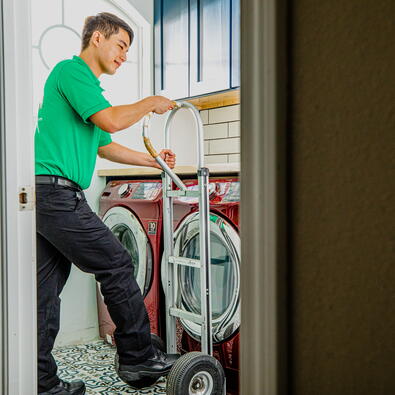
- Appliance dolly: The easiest way to move a washer and dryer is with a sturdy appliance dolly, which supports the weight and balances the load. Look for one with built-in straps to keep things secure.
- Moving straps: Straps are standard with most appliance dollies. They keep the load stable and make it easier to guide the machines through tight areas. This reduces tipping risk and gives you steady control.
- Lifting straps: These help two people carry a washer or dryer when an appliance dolly isn’t available. They shift the weight to your legs and shoulders for better control.
- Moving blankets: Moving blankets pad your washer and dryer. This helps prevent damage to your appliances and protects your home.
- Adjustable wrench or slip-joint pliers: These tools loosen fittings and disconnect the water supply and drain hoses from your washing machine.
- Bucket or towels: These catch any water left in the drain hose or water supply lines.
- Zip-top bags: It's easy to misplace small hardware during a move. Store screws, hose washers, and other removable pieces in a labeled zip-top bag.
- Transit bolts: These lock the drum to its outer cabinet during the move if you have a front-loading washing machine. This protects the appliance’s suspension system from damage.
- Tape measure: Use a tape measure to check your doorways, hallways, and staircases before moving day. Confirm you have enough clearance to get your washer and dryer through.
What To Do Before Moving a Washer and Dryer
Here’s how to prep to move your washer and dryer.
How To Prepare To Move a Washer
Unplug your washing machine. Remove anything inside the drum and run an empty cycle with washer cleaner or specialized detergent. Let the interior dry, then shut off the water supply.
Next, disconnect the water hoses and drain hose, catching any remaining water in a bucket or with towels. Secure the power cord to the side of the unit with tape to keep it out of the way. Install the manufacturer's transit bolts to secure the drum if you have a front-loading machine.
How To Prepare To Move a Dryer
Unplug your dryer and remove lint from the trap. Disconnect the exhaust vent from the back of the appliance and from the wall. Secure it and the power cord to the unit with tape.
If you have a gas dryer, shut off the gas supply before disconnecting the line. Make sure to cap the open gas line with a gas cap. When in doubt, hire a licensed technician to handle it to avoid gas-related accidents.
Considerations for Moving Stacked Units
Many guides that explain how to move a washer and dryer assume the two appliances are separate. In reality, stacked units are common in condos and smaller homes.
Moving a stack takes a little more planning because you're working with a taller setup that's harder to balance and maneuver than individual machines. You can move them together for short, flat distances. But separate them for long distances and moves with stairs and tight corners.
When moving stacked units together, keep the following in mind:
- Inspect the stack first: Most stacked washer and dryer sets are connected with a manufacturer-specific kit. Review your owner's manual to find out whether you need to separate the units before moving them. Keep any brackets or hardware you remove together in a labeled bag to make reassembly easier.
- Measure your path: Measure your closet, hallways, doors, and any tight corners before moving day. A stacked unit may fit through one opening but not another.
- Expect a top-heavy load: A stacked washer and dryer has a much higher center of gravity than a single appliance, making it more likely to tip. Secure the entire stack to a heavy-duty dolly with straps and ask a friend to stabilize the top while you carefully guide the dolly to the moving truck.
How Do You Move a Washing Machine and Dryer?
Once you've disconnected hoses and vents, slide an appliance dolly under each machine and secure it with moving straps. Because these are large, heavy appliances, have a helper on hand to steady the load while you guide the dolly through the house. Keep each machine as upright as possible throughout the move, especially the washer, since transporting it on its side can shift the drum and damage the suspension.
Use a loading ramp to help get the appliances on the truck instead of trying to lift them by hand. Once you get the washer and dryer inside the truck, position them against one of the sides and secure them with straps so they can't shift during transit. Avoid stacking boxes or furniture on top of them, as this can cause damage.
When you arrive at your new home, unload your washer and dryer carefully, and move them into the laundry room using the ramp and the dolly.
How To Reconnect a Washer and Dryer at Your New Home
Once your washer and dryer are in place, check that they sit level on the floor. Remove the transit bolts from the washing machine so the drum can move freely. Connect the water hoses and the drain hose. For the dryer, attach the exhaust vent.
Check that the plugs match the outlets. Many newer homes have four-prong outlets, while older builds may still use three-prong connections. You may need to change the cord to match the existing outlet.
After you connect everything, turn the water supply on and run a short test cycle for both appliances.
Hire College HUNKS To Move Your Washer and Dryer
Preparation’s the name of the game if you need to move a washer and dryer. Take the time to disconnect each appliance and protect the machines during transit, then reconnect everything correctly at your new home. This keeps your washer and dryer in good working condition and makes your moving day less stressful.
If you'd rather leave the heavy lifting to the professionals, College HUNKS Hauling Junk & Moving is here to help. Our trained team has the experience and equipment to do the job right, including washer and dryer removal, appliance disposal, and full-service moving.
Request a free, no-obligation quote today and let College HUNKS handle the hard work.
FAQ
How Many People Do You Need To Move a Washer and Dryer Safely?
Whether you’re moving out for the first time or upgrading to a luxury home, don’t relocate your washer and dryer alone. You need at least two people to move them safely. A second person helps steady the load and reduce the risk of injury or accidental damage to your home. For particularly large units or challenging home layouts, hiring professional movers is the safest option.
Can I Move a Washer or Dryer on Its Side?
Keeping your washer and dryer upright during transit is recommended. While tilting your appliances briefly to get them on the dolly is unavoidable, laying a washer on its side can shift the drum and suspension, leading to expensive repairs. Always check the owner’s manual, as some manufacturers provide moving instructions.
Do Stacked Washer-and-Dryer Units Need To Be Separated To Move Them?
In most cases, you do need to separate them. When you move each appliance on its own, the load is lighter and easier to get through doorways and up or down stairs.
While many stacked units are secured with manufacturer-installed brackets you must remove before moving them separately, others are designed to stay assembled during a move. Check the owner’s manual for details.
Is It Safe To Disconnect a Gas Dryer Myself?
You need to disconnect gas dryers carefully because they're connected to your home's gas supply. While some homeowners are comfortable doing this themselves, many manufacturers and moving professionals recommend having them disconnected and reconnected by a licensed technician. This helps prevent leaks and ensures the appliance operates safely in your new home.