
How To Move a Grandfather Clock Safely
A grandfather clock is one of the hardest things to move without causing damage. A dresser may withstand a bumpy ride without a dent, but these beautiful timepieces are another story. Behind that tall wooden case is a delicate system—a swinging pendulum, hanging weights, and thin chime rods. One tilt in the wrong direction can bend a suspension spring or crack the cabinet, causing costly damage.
The good news is that learning how to move a grandfather clock just takes strategy, a little patience, and the right materials. But if you’d rather put your treasured heirloom in expert hands, let a professional moving service manage it. College HUNKS Hauling Junk & Moving handles delicate, high-value pieces every day, hauling antiques and specialty items with care and consideration.
Supplies for Transporting a Grandfather Clock
Before you start moving a grandfather clock, gather your supplies—stopping halfway through to hunt for tape is exactly how a clock gets dropped. Here’s what you’ll want on hand:
- Moving blankets to cushion the wooden case
- Bubble wrap and packing paper for the internal parts
- Packing tape to secure padding and boxes
- Cotton gloves so skin oils never touch the brass or glass
- Twist ties or cable ties to hold the chains or cords in place
- A furniture dolly or hand truck to carry the weight
- Sturdy cardboard boxes
- A screwdriver for any panels or fittings that need to come off
How Do You Move a Grandfather Clock?
The whole job comes down to a few simple steps: Take the clock apart, move the case upright, and put it all back together at the other end. With the right care, even a first-timer can pull it off. Here are our top moving tips for grandfather clocks.
1. Remove the Glass Panels
First, put on your cotton gloves—fingerprints on brass and glass are hard to clean off later. If the front and side glass panels lift out, remove them and pack each one in bubble wrap inside a flat cardboard box. If they’re fixed in place, tape a piece of cardboard over each panel so nothing shatters in transit. Use tape with gentle adhesive to prevent damage to the clock’s finish.
2. Secure the Chains or Cables
Reach in through a side panel, and stop the pendulum from swinging with your hand. What comes next depends on your clock, but the goal is consistent: keep the chains and cables from slipping off or tangling during transit.
On a cable-driven movement, wedge folded packing paper above each pulley and wind the weights to the top so the cables stay taut. On a chain-driven movement, wind the weights about halfway—cranking them all the way up strains the sprockets—then clip the chains together with twist ties or cable ties below each sprocket.
3. Remove the Weights
Unhook the weights one at a time so they can’t bang against the case. Most grandfather clocks have three, and they’re usually not interchangeable. Each one drives a specific function, like controlling timekeeping, the chimes, or the strike. Putting one back in the wrong spot throws the whole mechanism off, so label every weight before it comes out. Wrap each weight separately, and set them in a padded box.
4. Remove the Pendulum
Steady the pendulum with one hand and lift it off its suspension spring at the top. Some models use a small pin to keep the pendulum in place, which you’ll need to remove carefully with needle-nose pliers. Wrap it and lay it flat in a long box—most pendulums run close to three feet, so some stores sell specialty boxes to accommodate them. Then, pad the exposed pendulum guide with packing paper to prevent it from swinging freely inside the case.
5. Protect the Chime Rods
Behind the clock face sits a row of thin, fragile chime rods. Left loose, they rattle against each other and everything around them, causing them to snap. Tuck small pieces of bubble wrap between the rods so they can’t vibrate or strike. Make it snug enough to hold them still, but not so tight that you bend them.
6. Wrap and Protect the Clock Case
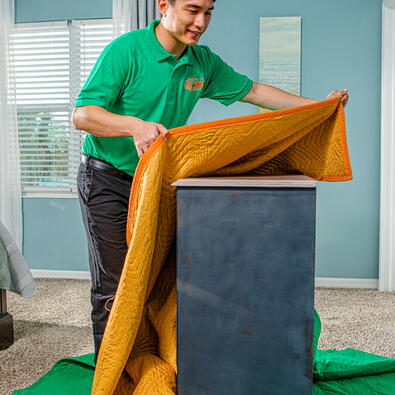
Close and lock the clock’s door, and tuck the key somewhere safe. Screw the leveling feet all the way in so they don’t catch on anything during transit. Now, wrap the entire case in moving blankets and hold the padding in place with packing tape. Be sure to always tape the blankets to themselves, never the wood finish, to prevent damage to the varnish.
7. Transport the Clock
Keep the wrapped case upright and tip it onto a furniture dolly or hand truck. Then, strap it against a padded wall inside the truck so it can’t slide around. Drive gently, with no sharp turns or hard stops, to prevent jostling the delicate parts around. If you want to avoid the stress of careful movements and bumpy rides, reach out to College HUNKS. Our trained, licensed teams can load and haul your beloved clock without the strain or risk. Whether you want hourly assistance or full-service help, College HUNKS is ready and willing to lend a hand with your unique move.
8. Reassemble the Clock
At your new home, reassemble the clock by going through the steps in reverse. Set the case where you want it and level it out with its feet—an uneven floor throws off the clock’s beat. Rehang the weights by their labels, hook the pendulum back onto its suspension spring, and free the chains or cables you tied off earlier. Give the pendulum a gentle push to start it and set the hands. Don’t panic if the clock sounds off at first. The beat and the chimes may take a few hours to even out.
Keep Your Timepiece Ticking on Moving Day
Moving a grandfather clock safely boils down to careful disassembly and packaging and a steady drive to its new home. While it certainly isn’t impossible, many people don’t have the time and energy for such a delicate task. That’s where expert movers come in.
College HUNKS offers professional moving services for heavy items—licensed, insured crews who take on the heavy lifting, ensuring your clock arrives without a scratch. We know how to transport a grandfather clock quickly and safely, so you can focus on your to-do list without worrying about a precious family heirloom.
Reach out to College HUNKS for a free estimate, and take the first step toward a stress-free move.
FAQ
How Do I Prepare a Grandfather Clock for Moving?
Prepare a grandfather clock for moving by stopping the clock, disassembling the fragile internal mechanisms, and wrapping the case. Snap a few photos of the inside and outside before you take anything apart to help you reassemble the piece when you get there.
Can I Move a Grandfather Clock by Myself, or Do I Need Professional Movers?
You can do it yourself, but weigh the trade-off honestly. A grandfather clock usually weighs 100–300 pounds, stands taller than the person carrying it, and tips easily. It’s a difficult task, and one bad lift can strain your back or damage an irreplaceable heirloom in one motion. Professional movers are trained to handle specialty items and haul grandfather clocks regularly. Local movers cut the stress and injury risk out of the job, so hiring help is often a good call for a valuable timepiece.
What Happens if You Lay a Grandfather Clock on Its Side During a Move?
Laying a grandfather clock flat can damage the piece. On its back or side, the suspension spring can bend, the movement can shift, and the chime rods can snap. While the clock may look fine, it may never keep proper time again. If you have fully removed the pendulum and weights and cushioned everything well, you can lay it down as a last resort, but upright transport is always the safer choice.
How Much Does It Cost To Move a Grandfather Clock?
There’s no flat rate as the price rides on a handful of factors like how far you’re traveling, how heavy and tall it is, and whether disassembly and reassembly are included. A short local move costs far less than a long-distance haul, and a delicate antique takes more care to handle than a sturdier reproduction. Since reputable movers quote per job rather than posting a fixed price, your best bet is requesting a tailored quote for your specific clock.