
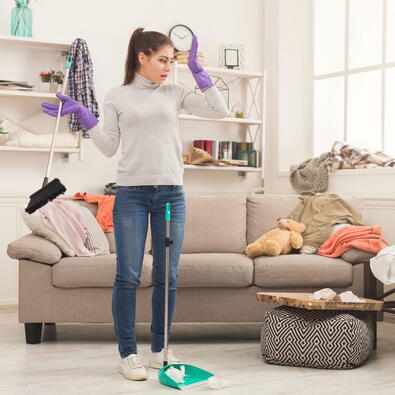
Real Talk: The Mental Toll of a Messy Home During Clutter Awareness Week
How to Declutter for Mental Health
- Clutter can increase stress, anxiety, and even disrupt your sleep
- A clean and organized home promotes focus, calm, and productivity
- Start small: tackle high-traffic areas like kitchens and living rooms first
- Decluttering doesn’t have to be overwhelming—small changes make a big impact

The Mental Effects of Clutter: Why Your Mess Might Be Stressing You Out
Let’s be honest—when your space is chaotic, your brain can feel the same way. The mental effects of clutter are real and well-documented. Piles of stuff can lead to:
- Increased cortisol (the stress hormone)
- Difficulty focusing or staying on task
- Poor sleep and reduced relaxation
- Feeling overwhelmed or irritable in your own home
During Clutter Awareness Week, it’s the perfect time to take stock of your space and your stress levels. Your environment affects your mood more than you might think.

Decluttering for Mental Health: Where to Start
You don’t need a weekend-long purge to feel better. Start small with spaces that impact your daily life the most. These decluttering for mental health tips will help you ease the mental load—one room at a time.
Kitchen Chaos? Clear the Counters
- Toss expired food from the fridge and pantry
- Designate zones for cooking, snacks, and appliances
- Limit countertop clutter to daily essentials—think coffee maker, not that waffle iron from 2012
- Bonus tip: a clean kitchen might even motivate you to cook healthier meals
Living Room Overload? Create a Calm Zone
- Donate or remove unused furniture to open up space
- Use baskets or bins to corral remote controls, toys, or magazines
- Limit decor to a few meaningful items—visual clutter = mental clutter
- Set a timer for 10 minutes a day to tidy up—it adds up quickly
Kids’ Rooms? Make Decluttering a Game
- Get kids involved—have them pick 3 toys to donate
- Use clear bins so everything has a home (and they can see it)
- Rotate toys seasonally to avoid overload
- Pro tip: less stuff often means more imaginative play

Clutter Awareness Week Tips to Stay on Track
Need extra motivation? These Clutter Awareness Week tips will help you keep the momentum going:
- Set a declutter challenge: one space per day for a week
- Take before-and-after photos—it’s satisfying and encouraging
- Reward yourself with a relaxing evening in your newly cleaned space
- Don’t aim for perfection—aim for progress

Final Thoughts: Your Space Should Support Your Peace
Decluttering isn’t just about appearances—it’s about how your home makes you feel. A tidy space can lower stress, improve focus, and help you breathe a little easier.
Feeling overwhelmed by the thought of hauling stuff out? College HUNKS can help—just point and we’ll take care of the rest. Whether it’s old furniture, toys, or that mystery box in the garage, we’ll donate or recycle what we can and help you reclaim your space (and your sanity).
Ready to start fresh this Clutter Awareness Week? Your mind—and your home—will thank you.